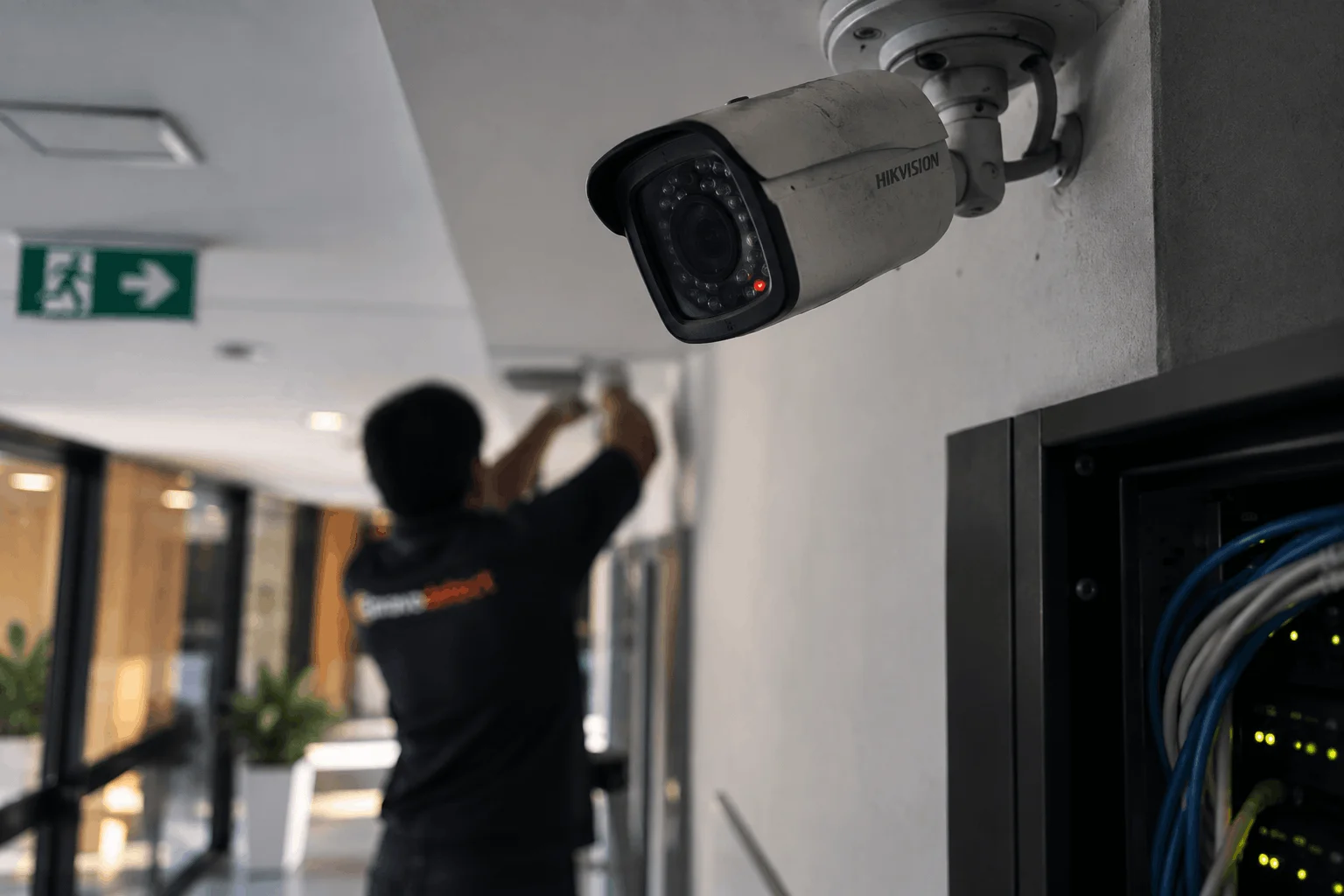
It started with a dead camera.
A client once asked us for footage of a Tuesday evening incident. It should have been routine: pull the channel, find the timestamp and hand over the clip. Instead, the recorder had eleven days of nothing for that channel.
The camera had failed quietly sometime the previous week, and nobody had noticed because nobody was watching the watcher.
That gap is the whole story. Not the camera itself, which was replaced in an afternoon, but the eleven days in which the building believed it had CCTV coverage it did not actually have.
This is why CCTV health monitoring matters. A security camera can be physically installed, connected to a recorder and still fail without anyone immediately realizing it. Monitoring the health of the devices behind the security system is what helps turn an assumed security environment into a measurable one.
Why CCTV Failures Stay Silent
Cameras, switches and recorders do not usually announce their own failure in a way that reaches the security team. A power trip on a PoE switch, a loose uplink behind a false ceiling or firmware that freezes after an update can create a blind spot without producing an obvious physical warning.
Sometimes the situation is even harder to spot. A monitoring screen may continue showing a frozen last frame, making the camera appear normal until somebody looks closely. A device may remain powered while its network connection has failed. A recorder may still be running while one channel has stopped receiving useful data.
These are not necessarily dramatic failures. They are quiet failures.
Add enough of them across a building with two hundred devices and the inventory becomes something nobody can completely trust. The spreadsheet may say there are 214 devices online. The actual network may tell a different story.
The cost of a blind spot is never the camera. It is the incident that went unrecorded.
The Report Written by Hand
When an auditor, insurer or security manager eventually asks for uptime evidence, someone may have to reconstruct what happened from memory and incomplete records.
The information might come from maintenance logs, outage tickets, emails, screenshots and a physical walk-through of the building. Someone may remember that a camera was replaced last month, but not exactly when it stopped responding. Another person may know that a switch was restarted but not which cameras were affected.
That approach can produce a report, but it does not necessarily produce reliable evidence.
A proper CCTV health monitoring system should continuously record device status so that teams do not have to reconstruct weeks of operational history after an incident.
What bravodetect Was Built to Solve
bravodetect, designed and developed by ScoreTech Vision, was built to close that kind of monitoring gap before it becomes an operational problem.
The system discovers cameras, switches and other IP devices on the network, checks their availability at regular intervals and maintains a record of device health over time. Instead of waiting for someone to notice a missing camera feed, the monitoring system can identify a device that has stopped responding and give the team information about when the problem occurred.
The result is a more measurable approach to CCTV infrastructure.
bravodetect can help teams understand:
- Which devices are currently responding
- Which devices have stopped responding
- When a device became unavailable
- How long a device remained unavailable
- Which devices repeatedly experience failures
- Whether monitoring gaps are affecting reported availability
Monitoring the Devices Behind the Security System
CCTV security does not end with the camera itself. The supporting network infrastructure matters too.
A camera may depend on PoE power, network switches, uplinks, recording systems and other IP infrastructure. A failure anywhere along that path can affect the availability of the camera system.
That is why device-level monitoring is important.
If several cameras connected to the same switch become unavailable at approximately the same time, the problem may not be individual cameras. It could point toward a shared network or power issue.
With historical monitoring data, teams can investigate those relationships instead of treating every failed camera as a separate incident.
Built for Continuous Monitoring
bravodetect performs regular health checks rather than relying on occasional manual inspections.
- Auto discovery helps keep the device inventory aligned with the actual network.
- Regular health checks identify device availability problems throughout the day.
- Timestamped events provide a record of when devices went down and when they recovered.
- Historical data helps teams identify recurring failures and patterns.
- Centralized reporting gives security and facilities teams a clearer view of device health.
The exact value is not simply knowing that a camera is offline. It is knowing that the camera went offline, understanding how long it remained unavailable and having evidence of what happened.
Why On-Premise Monitoring Matters
For facilities where security data and infrastructure need to remain inside the building, bravodetect operates on an on-premise server.
The monitoring system does not need to send device-health information to an external cloud service to perform its core monitoring functions. The discovery, health checks, alerting and reporting process can operate within the organization’s own network environment.
That can be particularly useful for sites with strict network isolation, internal security policies or environments where external connectivity is restricted.
The Building Still Needs Something Watching
The building still needs good cameras.
It needs reliable network infrastructure, properly configured recording systems and technicians who can respond when something fails.
But it also needs something watching the devices that make the security system work.
A camera that fails for ten minutes is an operational event. A camera that fails for eleven days without anyone knowing is a security blind spot.
CCTV health monitoring helps close that gap by continuously checking the infrastructure and creating a record that teams can act on.
The goal is simple: don’t wait for an incident to discover that the system protecting the building stopped working days ago.